Hello, welcome to Wuxi Bavatana Industrial Equipment Co., Ltd!
language:  ∷

∷ ∷ 
Port Esbjerg has been designated as part of the World Economic Forum (WEF)’s Transitioning Industrial Clusters (TIC) initiative.
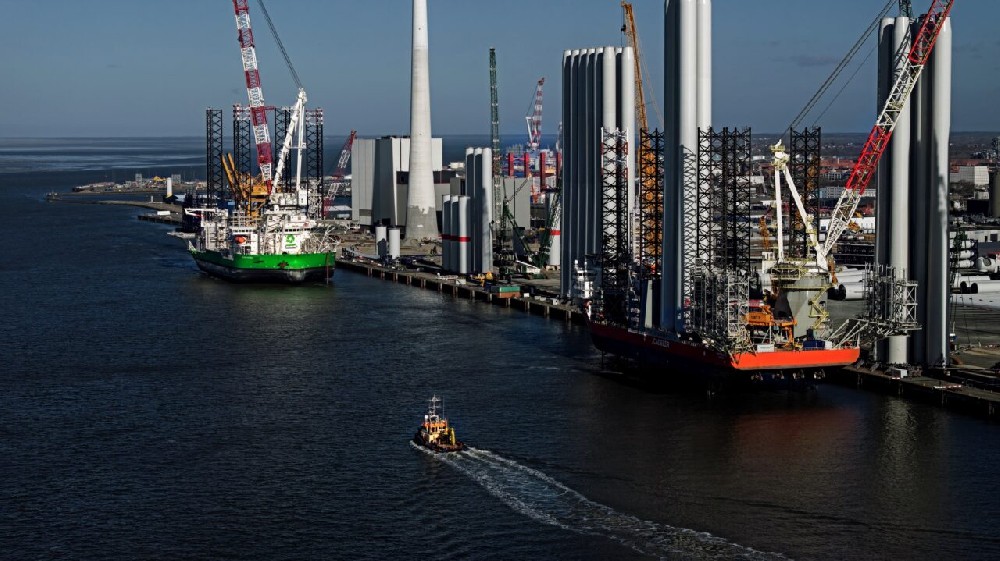
The designation reflects the port’s role in developing a low-emission, multi-energy hub, integrating offshore wind, CO2 transport and storage, hydrogen production and industrial innovation within a single ecosystem.
According to the WEF, the Esbjerg cluster is focused on delivering climate-friendly energy at scale, with infrastructure and industrial capabilities aligned to support Europe’s energy transition.
Dennis Jul Pedersen, CEO of Port Esbjerg, said: “Being a Transitioning Industrial Cluster means that the Port Esbjerg is important to the green transition and an integral part Europe’s green transition. We can see that different clusters across Europe and the world can make a difference. When major players take part in the development, as they do at the Port Esbjerg, it can also generate economic growth while accelerating the green transition.”
The TIC initiative brings together industrial hubs working collaboratively across public and private sectors to accelerate emissions reduction. Ports are increasingly central to these efforts, given their role as energy and logistics nodes.
Pedersen added: “When undertaking a large and ambitious green transition, it is major industrial clusters that drive the changes. If you look at the very large ports in Europe, for example, they consume as much electricity as three quarters of Denmark’s total demand. In other words, much of the change must also come from large ports. The Port of Esbjerg is one of those that can contribute, as we are much more than offshore wind.”
He further highlighted the port’s expanding energy portfolio: “Europe is highly focused on green electricity, CO2 capture and storage.
In Esbjerg, we have, among other things, a carbon management strategy and a hydrogen strategy.
Hydrogen production can be adapted for heavy industry – and, of course, help supply green power to a fully digitalised world with large data centres.
The port is also advancing CO2 infrastructure, including a terminal designed to receive and store emissions before offshore sequestration, strengthening its role in emerging carbon value chains.
The TIC model emphasises shared infrastructure and coordinated investment to accelerate decarbonisation at scale, an approach increasingly relevant for ports integrating energy, industry and logistics systems.
In November 2025, Port Esbjerg transformed its Port Control with a control room and integrated IT systems, enhancing operational oversight, real-time coordination, and safety across the busy Danish port.
WeChat scan code

support hotline

mobile phone
Add:No. 8-1, Xigan Road, Xinwu District, Wuxi City 苏ICP备2025225786号 XML